

When Should a Tree Be Removed Instead of Trimmed? A Homeowner's Guide

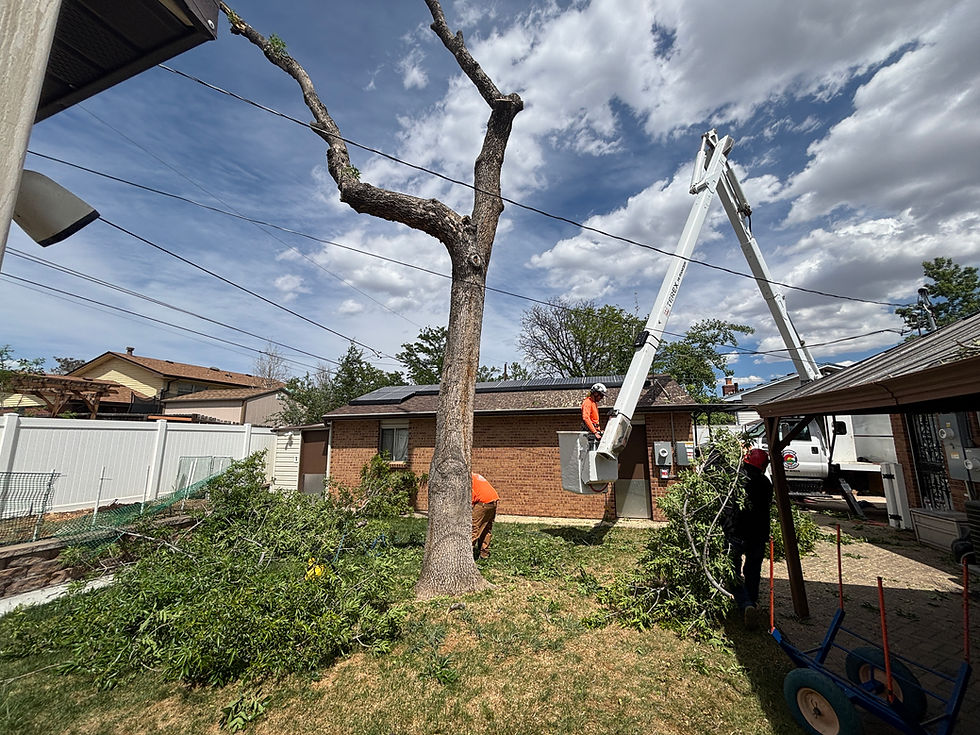
A tree that's leaned a little more every year finally gets a phone call. Maybe it's a branch that cracked in the last windstorm, or a trunk that looks fine from the porch but has a soft spot near the base you only noticed while raking leaves. The question that follows is rarely simple: does this tree need a trim, or does it need to come down? Deciding when a tree should be removed instead of trimmed isn't a judgment call homeowners make with confidence — get it wrong in either direction, and you're either paying for removal you didn't need, or leaving a hazard standing through the next Front Range windstorm.
Why "It Still Has Leaves" Isn't the Test You Think It Is
Most homeowners judge a tree's health by its canopy. If it's leafing out and green in summer, it must be fine. That instinct is exactly what leads people to under-address serious problems. A tree can hold a full, healthy-looking canopy for years while the real damage is happening below ground or deep inside the trunk — root rot, internal decay, or a girdling root slowly cutting off its own water supply. By the time canopy dieback shows up as an obvious symptom, the structural failure it reflects may already be advanced. Canopy health tells you how the tree is feeding itself right now. It tells you almost nothing about whether the trunk or root system can still hold the tree upright in 60 mph gusts.
When Trimming Is the Right Call
Pruning is the right move when problems are limited to specific branches and the tree's core structure — trunk, main scaffold limbs, and root flare — is intact. Deadwood, crossing branches that rub and create entry points for pests, or a canopy that's grown unbalanced and top-heavy are all classic trimming situations. Regular tree care maintenance on a 2–3 year cycle also does quiet preventive work: it reduces wind resistance in a dense canopy, corrects structural issues while limbs are still small enough to cut cleanly, and extends the tree's productive life by years.
When a Tree Should Be Removed Instead of Trimmed
Certain signs shift the conversation from "prune it" to "take it down." A trunk that leans noticeably more than it did last year — especially if the lean developed suddenly rather than over a decade — often signals root failure, not a cosmetic issue trimming can fix. Large, vertical cracks running down the trunk, mushroom-like fungal growth at the base, or hollow sounds when you knock on the lower trunk all point to internal decay that pruning can't reach. So does significant dieback across more than 50% of the canopy, which usually means the root system can no longer support the tree it once could.
The Liability Problem Most Homeowners Don't Consider
Here's the angle that gets missed in most tree-health checklists: this decision isn't only about the tree's biology, it's about what happens if you guess wrong. A compromised tree that fails during a storm doesn't just damage itself — it can take out a fence, a roof, a power line, or worse, and homeowners insurance can get complicated fast if there's any indication the hazard was known and ignored. That reframes the removal-vs-trim decision from a tree-care question into a risk-management one. If a tree is showing multiple warning signs at once, the cost of removal is almost always smaller than the cost of what a failure could cause.
Storm Season Changes the Math
Trees that would otherwise get another season of monitoring often need a faster decision once storm season is underway. Hail and high-wind events move through Brighton, Erie, and Commerce City with enough regularity that a borderline tree — one you were planning to "keep an eye on" — can go from standing to a hazard in a single storm. A tree with early signs of root or trunk failure that might have held on through a calm summer has far less margin once 60-70 mph gusts start testing it. That's part of why storm damage prevention work is best scheduled proactively, not reactively, in the weeks before Colorado's peak storm months.
Getting an Honest Answer Instead of a Guess
None of these signs are meant to replace an actual inspection — a leaning trunk can sometimes be corrected with cabling, and a hollow-sounding base doesn't always mean total structural failure. But homeowners rarely have the training to tell whether a tree should be removed instead of trimmed, or simply needs monitoring. That distinction is exactly what a certified arborist evaluation is built to answer, weighing species, decay location, lean angle, and proximity to structures before recommending tree removal over trimming.
If a tree on your property has you asking this question, don't wait for the next windstorm to answer it for you — schedule an inspection with Riverdale Tree Services and get a clear, professional read on whether your tree needs a trim or a removal before the next Front Range storm puts that decision on the clock.


Comments